
Introduction
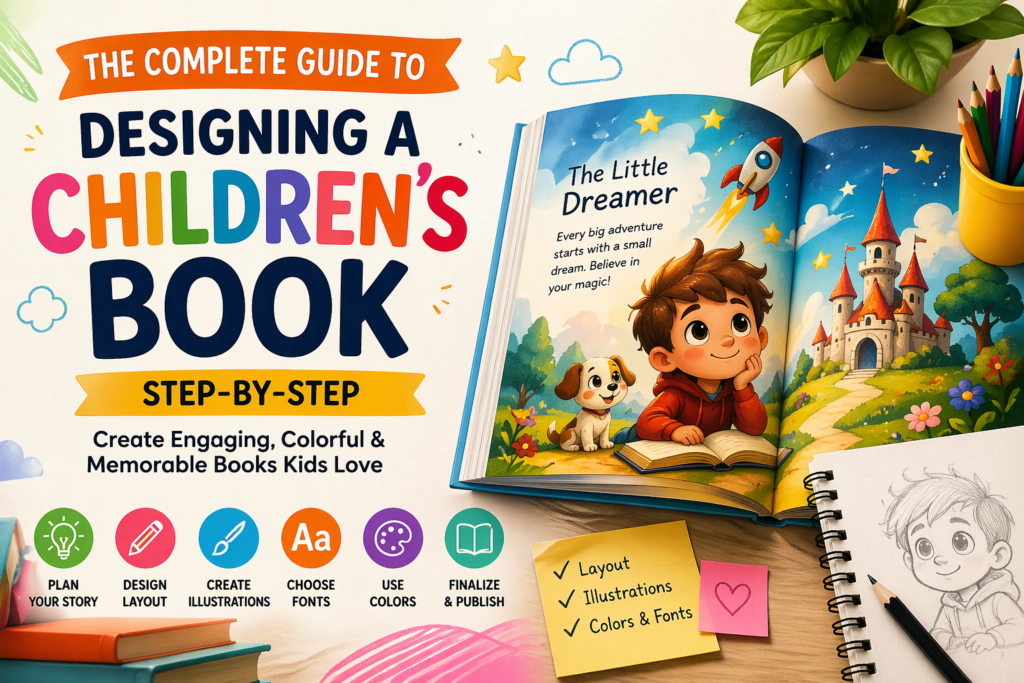
Designing a children’s book is more than just adding pictures to a story. It is about creating an engaging visual experience that captures a child’s imagination. A well-designed book not only looks attractive but also makes reading fun and easy.
In today’s competitive market, children’s books need to stand out not only because of their story but also because of their design. Good design helps children understand the story better and keeps them engaged from beginning to end.
Step 1: Understand Your Target Age Group
Different age groups have different preferences, learning abilities, and attention spans. That’s why designing without knowing your audience can make your book ineffective. For example, toddlers prefer large, colorful visuals with very little text, while older kids can handle more detailed content.
If your design does not match the child’s age, they may lose interest quickly or find the book difficult to understand. A professional designer always plans the visuals, fonts, and layout according to the target age group.
👉 In short, age-based design ensures your book connects with the right audience and delivers the right experience.
Step 2: Plan Your Story Layout
Before jumping into design, it is important to plan how your story will be distributed across pages. This includes deciding what content goes on each page and how illustrations will support the text. A well-planned layout ensures smooth storytelling and avoids confusion.
Proper planning also helps maintain a consistent flow throughout the book. You can highlight important scenes, control pacing, and create a balanced reading experience. Without planning, the book may feel unorganized and difficult to follow.
👉 A strong layout plan acts as a blueprint for your entire book design.
Step 3: Create Engaging Illustrations
Illustrations are the most important part of a children’s book because they help bring the story to life. Children often understand visuals faster than text, so illustrations should clearly represent the story and emotions.
Good illustrations should be expressive, simple, and consistent throughout the book. Characters should look the same on every page, and their emotions should match the story. Poor illustrations can confuse children and reduce engagement.
👉 Strong visuals make your story memorable and enjoyable for young readers.
Step 4: Choose the Right Fonts
Typography plays a big role in readability, especially for children who are still learning to read. Fonts should be simple, clear, and large enough to read comfortably. Avoid using overly decorative or complex fonts that can confuse young readers.
Spacing between letters and lines is equally important. Proper spacing improves readability and makes the text look clean. A good font choice ensures that children can easily follow the story without struggling.
👉 Easy-to-read text keeps children engaged and improves their reading experience.
Step 5: Use Colors Smartly
Colors are one of the first things that attract children to a book. Bright and vibrant colors create excitement, while soft colors can create a calm and soothing effect. Choosing the right color combination helps set the mood of the story.
However, using too many random colors can make the design look messy and distracting. It is important to maintain a consistent color theme throughout the book. Smart use of colors enhances visual appeal and supports storytelling.
👉 Colors should guide emotions, not create confusion.
Step 6: Final Formatting & Export
The final step is to prepare your book for printing or digital publishing. This includes setting proper margins, ensuring high-resolution images, and exporting the file in the correct format (usually PDF).
If formatting is not done properly, even a well-designed book can look unprofessional when printed. Text may get cut off, images may lose quality, and alignment issues can appear. Taking time to finalize formatting ensures a polished and professional result.
👉 Final formatting is what turns your design into a publish-ready product.
Conclusion
Designing a children’s book requires creativity, planning, and a deep understanding of young readers. Every step, from choosing colors to creating illustrations, plays an important role in the final outcome. If done correctly, your book will not only look beautiful but also provide an enjoyable and meaningful experience for children. A well-designed book has the power to educate, entertain, and inspire young minds.