
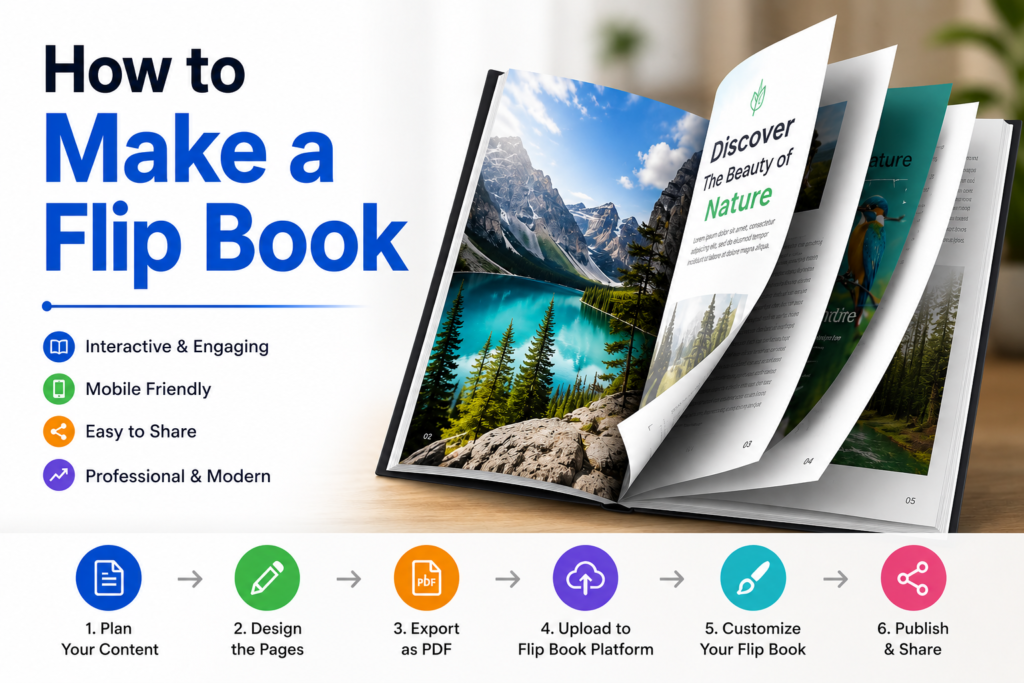
How to Make a Flip Book is one of the most searched topics for creators who want to present digital content in a modern and interactive way. From children’s storybooks and magazines to portfolios and business catalogs, flip books offer an engaging reading experience that feels similar to reading a real book.
Unlike regular PDF files, flip books include page-turning animations, interactive features, and mobile-friendly layouts that make content more engaging and visually appealing. Businesses, publishers, teachers, and designers widely use flip books to improve presentation quality and user engagement.
If you are wondering how to make a flip book, this complete guide will help you understand the process step by step.
What is a Flip Book?
A flip book is a digital publication that allows readers to flip pages like a physical book. Understanding how to make a flip book can help businesses and creators present content more professionally online.
Flip books are commonly used for:
- Children’s books
- eBooks
- Portfolios
- Product catalogs
- Brochures
- Magazines
- Educational books
- Company presentations
Modern flip books work smoothly on desktop, tablet, and mobile devices.
Why Use a Flip Book?
People searching for how to make a flip book usually want a more interactive and professional way to present digital content.
Benefits of flip books include:
- Interactive page-turning effects
- Better user engagement
- Professional presentation
- Easy online sharing
- Mobile responsiveness
- Improved branding
- SEO-friendly publishing
- Lower printing costs
A flip book helps keep visitors engaged longer compared to normal PDF documents.
Step-by-Step Guide on How to Make a Flip Book
Step 1: Plan Your Content
The first step in how to make a flip book is organizing the content you want to include.
You can create flip books for:
- Storybooks
- Activity books
- Business brochures
- Product catalogs
- Portfolios
- Educational materials
Before designing, make sure your content is:
- Well-structured
- Easy to read
- Visually balanced
- High quality
Design Tip:
When learning how to make a flip book, always use clear layouts and organized sections for a cleaner reading experience.
Step 2: Design the Pages
Good design is essential when understanding how to make a flip book professionally.
Important design elements include:
- Clean typography
- Balanced spacing
- High-quality images
- Proper alignment
- Consistent colors
Popular design software:
- Adobe InDesign
- Canva
- Photoshop
- Illustrator
- Affinity Publisher
Step 3: Export as a PDF
Another important step in how to make a flip book is exporting your design correctly.
While exporting:
- Use proper page size
- Maintain image quality
- Optimize file size
- Check margins and alignment
A properly optimized PDF improves loading speed and overall user experience.
Step 4: Choose a Flip Book Platform
Several online tools can help you understand how to make a flip book easily.
Popular flip book platforms include:
These platforms automatically create realistic page-turning animations.
Design Tip:
Choose a platform that supports mobile optimization and easy website embedding.
Step 5: Upload Your PDF
Once you learn how to make a flip book, uploading your PDF becomes simple.
After selecting the platform:
- Create an account
- Upload your PDF
- Wait for conversion
- Preview the flip book
Most platforms automatically generate navigation buttons and page-flipping effects.
Step 6: Customize the Flip Book
Modern flip book tools offer many customization options for users learning how to make a flip book.
You can add:
- Background colors
- Logos and branding
- Navigation controls
- Sound effects
- Videos
- Clickable links
- Social sharing buttons
Step 7: Optimize for Mobile Devices
A major part of how to make a flip book is ensuring mobile responsiveness.
Make sure:
- Text remains readable
- Navigation is smooth
- Images display correctly
- Pages load quickly
Mobile-friendly flip books improve user engagement significantly.
Step 8: Publish and Share
The final stage of how to make a flip book is publishing and sharing your content online.
You can:
- Embed it on your website
- Share the direct link
- Post on social media
- Send via email or WhatsApp
Flip books are excellent for online marketing and digital publishing.
Best Uses of Flip Books
Children’s Books
People researching how to make a flip book often create interactive children’s storybooks.
Business Catalogs
Businesses use flip books to showcase products and services professionally.
Portfolios
Designers and artists use flip books to present creative portfolios attractively.
Educational Content
Schools and teachers create interactive learning materials and digital textbooks.
Tips for Creating a Professional Flip Book
Use High-Resolution Images
Sharp visuals create a premium appearance.
Focus on Readability
Readable typography improves user experience.
Keep Navigation Easy
Simple navigation helps readers explore content comfortably.
Optimize File Size
Heavy files can slow down performance.
Maintain Consistent Design
Use consistent colors, fonts, and layouts throughout the flip book.
Common Mistakes to Avoid
While learning how to make a flip book, avoid these common errors:
- Low-quality PDFs
- Overcrowded pages
- Tiny text sizes
- Slow loading speed
- Poor mobile optimization
- Excessive animations
A clean and organized design always works better.
Modern Trends in Flip Book Design
Modern trends are changing how to make a flip book more interactive and visually engaging.
Popular flip book trends in 2026 include:
- Interactive storytelling
- AI-assisted layouts
- Full-screen reading mode
- Minimalist interfaces
- Embedded multimedia
- Mobile-first design
- Animated transitions
These trends help digital content look more modern and engaging.
Why Businesses Prefer Flip Books
Businesses and publishers researching how to make a flip book often use flip books because they:
- Improve visual presentation
- Increase engagement
- Look professional
- Support branding
- Enhance online marketing
Flip books are now widely used for digital publishing and creative presentations.
Final Thoughts
Learning how to make a flip book is a valuable skill for businesses, publishers, designers, and educators. Flip books offer a modern and interactive way to present content while improving user experience and engagement.
Whether you are creating a children’s storybook, portfolio, magazine, or business catalog, a well-designed flip book can make your content look professional, creative, and visually impressive.
By using the right tools, maintaining good design practices, and optimizing for mobile users, you can create a high-quality flip book that attracts readers and enhances digital presentation.